Refractive Errors
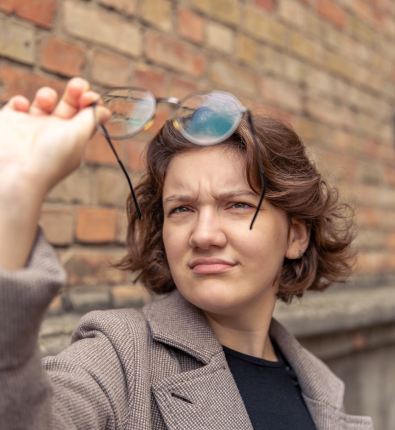
Refractive errors are common vision problems that occur when the shape of the eye prevents light from focusing properly on the retina. As a result, vision becomes blurred and unclear. These conditions can affect people of all ages and are easily diagnosed with a comprehensive eye examination.

Main Types of Refractive Errors
1. Myopia (Short-sightedness)
➤
Distant objects appear blurred
➤
Near objects are seen clearly
➤
Caused by a longer eyeball or excess corneal curvature
2. Hypermetropia / Hyperopia (Long-sightedness)
➤
Near objects appear blurred
➤
Distant vision may also be affected in higher power
➤
Caused by a shorter eyeball or flatter cornea
3. Astigmatism
➤
Distorted or blurred vision at all distances
➤
Due to irregular curvature of the cornea or lens
4. Presbyopia
➤
Age-related difficulty in near vision (usually after 40 years)
➤
Due to reduced flexibility of the natural lens
Symptoms
➤
Blurred or distorted vision
➤
Eye strain and headaches
➤
Difficulty reading or seeing distant objects
➤
Squinting
Diagnosis
➤
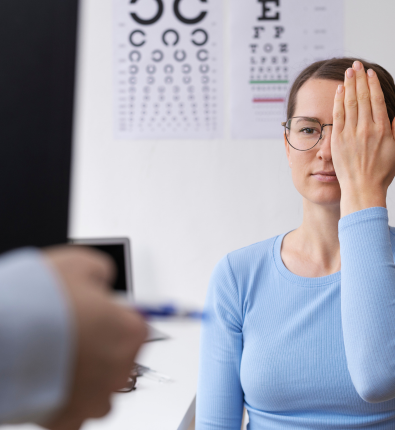
Eye examination with refraction test
➤
Visual acuity testing (Snellen chart)
➤
Cycloplegic refraction (especially in children)
Treatment Options
➤
Spectacles
➤
Contact lenses
➤
Refractive surgery (LASIK, PRK, SMILE—suitable cases only)
➤
Presbyopic correction: bifocal, progressive lenses, or multifocal IOLs